
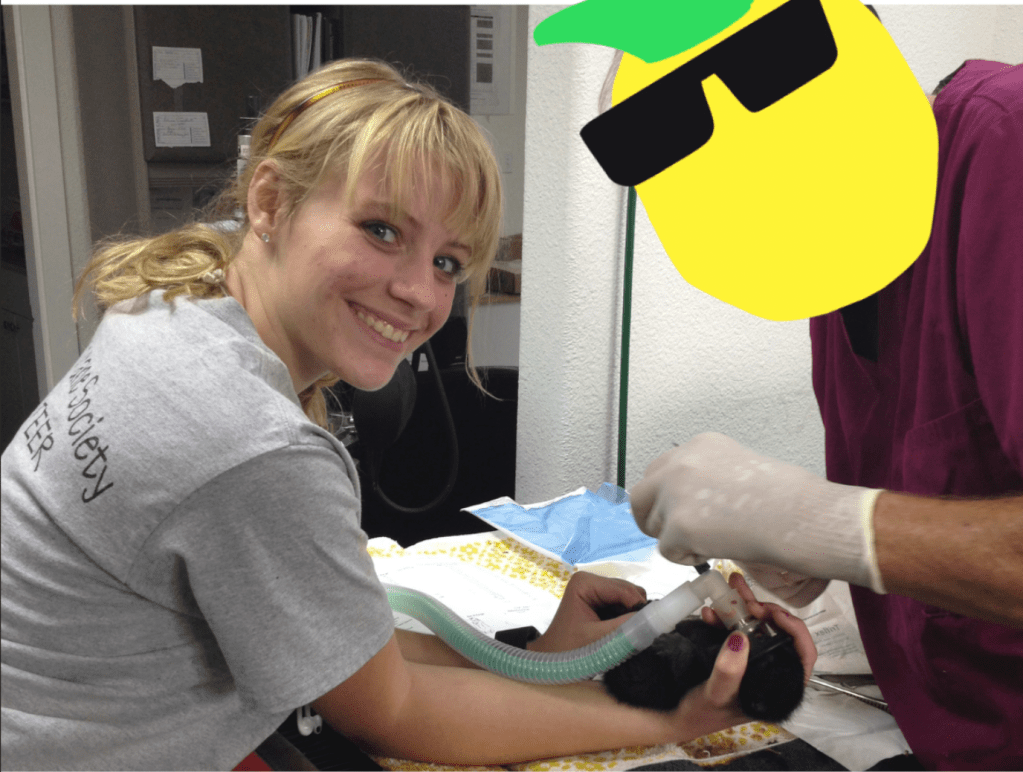
I still remember vividly—rolling the veins of another shelter dog to end its life. Another victim of humanity’s poor stewardship.
My point of view was different from most in that world. I grew up in a conservative, faith-based home, and suddenly I found myself in a climate that leaned heavily toward liberal democracy—the culture that shaped much of the rescue and shelter system. As a 17 year old, not knowing much else, my worldview was rocked.
We came from vastly different backgrounds, but somehow, in many different ways, our attitudes often overlapped in unexpected ways.
Working in rescue taught me more than animal care. It taught me the richness of engaging with people instead of putting them in boxes, assuming I already knew what they believed. I discovered how much there was to learn in listening—curiosity became my lifeline. And that same curiosity is what drives the way I study Scripture today.
That’s why my years in rescue still weigh so heavily on me. The endless flow of unwanted litters, the heartbreaking stacks of euthanasia lists—these were not accidents of nature. They were the direct result of human choices.
Choices to breed without thought. To sell without responsibility. To view life as a commodity rather than a trust.
When I turn to Scripture, I can’t reconcile that kind of recklessness with the heart of Elohiym (God). The call to “be fruitful and multiply” was never a call to multiply without wisdom. Creation is not ours to exploit, but ours to cultivate in alignment with Yahuah’s (The Lord’s) design.
From the very beginning, humanity was given a sacred charge: to care for creation.
“And Elohiym (God) said, Let us make man in our image, after our likeness: and let them have dominion over… all the earth.”
– Bere’shiyth (Genesis) 1:26, Cepher
“Dominion” was never license for cruelty. It meant stewardship—ruling in the way Elohiym rules: with justice, care, and provision. The same God who counts every sparrow (Mattithyahu [Matthew] 10:29) entrusted us with tending His creatures.
Throughout Torah, we find repeated instructions to treat animals with compassion:
- Devariym (Deuteronomy) 25:4 – “You shall not muzzle the ox when he treads out the grain.” Even working animals were to benefit from their labor.
- Shemoth (Exodus) 23:5 – “If you see the donkey of him that hates you lying under his burden, you shall refrain from leaving him; you shall surely help him with it.” Compassion extended even to an enemy’s animal.
- Mishlei (Proverbs) 12:10 – “A righteous man regards the life of his beast: but the tender mercies of the wicked are cruel.”
In other words, righteousness isn’t just vertical between us and Elohiym—it’s visible in how we treat the vulnerable creatures He entrusted to us.
You cannot call yourself a good steward if you are careless with the lives entrusted to you. Stewardship requires intentionality. It means planning, testing, training, and caring—not just for the moment, but for the long-term flourishing of both animals and the people who depend on them.
When we treat animals as disposable, the consequences are devastating. Nearly a million lives of companion animals are euthanized annually, simply because of our neglect.
That’s not nature’s failure. That’s our failure.
That’s why ethical breeding matters, its:
- Guarding the health of bloodlines through intentional pairing and testing.
- Protecting livestock and households with dogs bred for soundness of body and temperament.
- Ensuring that every puppy has a purpose, a future, and a place where it will be cherished – not euthanized.
Ethical breeding acknowledges what I saw firsthand in rescue: when we fail to steward wisely, innocent lives pay the price.
This is about participating in Yah’s original blueprint—multiplying life with care, intention, and righteousness, instead of perpetuating cycles of neglect.
The truth is, we can’t undo the suffering that’s already happened. But we can change what happens next. Every choice we make—whether to adopt, to purchase, or to breed—either adds to the problem or helps redeem it.
If you’re considering bringing an animal into your home, seek out breeders who steward wisely (see my post on Your Guide to Buying a Puppy for more details) or open your heart to a rescue that desperately needs you. If you raise animals yourself, let intentionality guide every decision. Refuse to see life as disposable.
A righteous man regards the life of his beast (Mishlei [Proverbs] 12:10). That is the standard. That is the call.
Because one day, when we stand before Elohiym, we will answer not just for how we treated people, but also for how we cared for the vulnerable creatures He entrusted into our hands. May He find us faithful stewards—intentional, compassionate, and aligned with His design.
 The Flocking Farm
Leave a comment